
ADHD Burnout in Moms: Why Your Brain Needs Stimulation, Not More Productivity
If you've spent months trying to fix your ADHD burnout with a better routine, a stricter schedule, or sheer willpower, and none of it has stuck, you are not imagining things. ADHD burnout in moms rarely comes down to a lack of discipline. More often, it comes from a brain that isn't getting the mental stimulation it actually needs to function.
I didn't understand this for most of my 20s and 30s, even after I became a stay-at-home mom and was sure that slowing down would finally fix things. Instead, I fell apart in a completely different way. This post is about what I wish I had understood sooner about ADHD, stimulation, and why the boring parts of motherhood get so much harder when your brain is starved for a real challenge.
Why Willpower Doesn't Fix ADHD Burnout
Books have been my ongoing hyperfocus for years now. I read three to five books a week, and reading is honestly the only way I can get my body to sit still long enough to rest, because it keeps my mind busy enough to let the rest of me settle.
That wasn't always true. It didn't start until I left a full-time corporate job to stay home with my oldest son, Bowman, at around 18 months old. I loved my job, but I was barely holding our house and myself together, and I assumed staying home would fix a lot of my ongoing mental health struggles.
What I wasn't ready for was how much I would fall apart without something to actually think about. I already knew my body needed a lot of sleep and a lot of movement. What took me far longer to accept was that my brain needed real mental stimulation just as badly, and that no amount of willpower was going to replace it.
If you recognize the signs of ADHD burnout in yourself, this part might sound familiar: after a full day keeping up with a toddler, I would be physically wiped out and mentally bored out of my mind. I tried reading to tire my brain out enough to sleep. It rarely worked, and I would end up awake until one or two in the morning trying to wear myself down.
The Recess Connection: Why ADHD and Hobbies Go Together
Here's the analogy that finally made this click for me: taking away a kid's recess when they act out in class backfires every time, because that movement and that break is exactly what their brain needs to regulate itself in the first place.
Moms with ADHD do the same thing to ourselves. When we deprive ourselves of real mental stimulation, real challenges, real interests, we're cutting off the exact fuel our brains run on. Interest-driven brains need novelty and challenge the same way a car needs gas, and that stimulation is what makes the boring stuff (the laundry, the dishes, the whole daily grind) easier to actually do. This is really a story about ADHD and boredom, not laziness.
I already know what you might be thinking:
- "That sounds great, but I don't have time."
- "I don't even know what I think is fun anymore."
- "I have a to-do list a mile long."
I get it. Truly. But accepting that real stimulation is what makes the boring stuff easier, not the other way around, rewired how I live my whole life. It wasn't an easy shift, and it took years of trying different hacks and habits before this was the one that actually worked.
The Belief That Keeps Moms With ADHD Stuck
A lot of us carry a quiet belief that our interests are something we'll be allowed to enjoy once we finally get a handle on whatever boring task we hate most. But this is exactly like withholding a kid's recess until their behavior improves. Giving a kid recess is what makes it possible for them to behave in class. Giving yourself permission to pursue your interests and your mental challenge is what makes it possible to do the boring tasks.
Finding you rhythm in ADHD motherhood was never just about mastering the boring tasks. If that's all you focus on, you'll stay stuck.
The trickiest part of this shift, for me, came down to three things: learning how to pursue mental stimulation inside the real limits of my life, learning how to make room for it without spiraling into overstimulation, and giving myself permission to chase novelty without guilt or the need to be perfect at it.
Finding One Big Challenge (and a Handful of Microhobbies)
Even years into this, figuring out how to pursue stimulation inside my actual life is still the hardest part. Once the floodgates open, it's tempting to chase everything at once, which rarely goes well for a brain full of ideas.
What helped most, early on, was getting brutally honest about my own capacity. I default to taking on too much and burning out, so I needed real boundaries around when and how I chased big ideas, along with clarity on what I actually expected of myself day to day.
What's worked best is having one clear area of challenge at a time, paired with a rotating handful of small hobbies. The area of challenge is a bigger goal or project I'll work on for months or years. The microhobbies rotate constantly and exist purely for fun and novelty. Both matter, and I've learned to value them equally instead of treating hobbies like a waste of time.
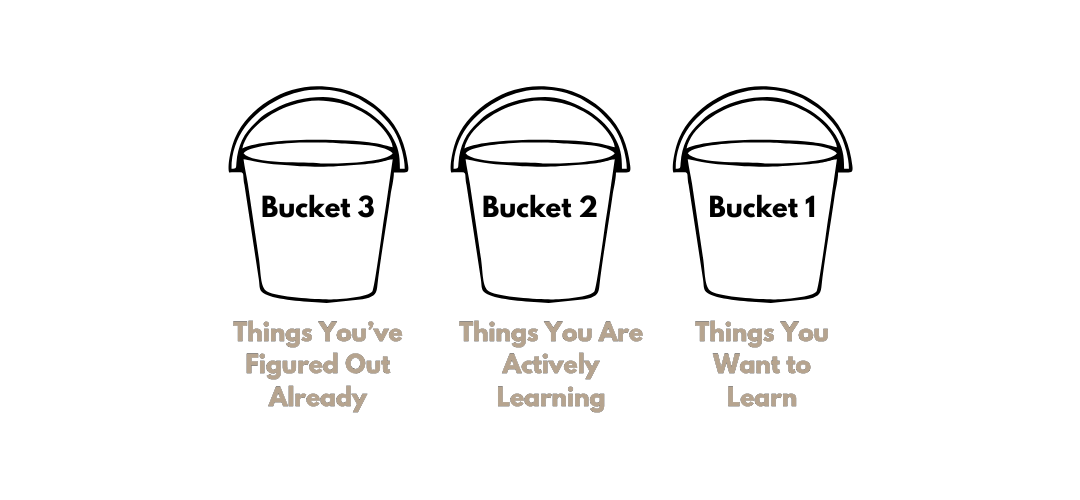
I think about this in three buckets. Bucket 1 holds every idea and project I'd love to pursue someday. Bucket 2 holds the one challenge I'm actively working on right now. Once that challenge is finished, or I've reached a solid level of proficiency, it moves to Bucket 3, and something new moves from Bucket 1 into Bucket 2.
Your one area of challenge needs to be big and interesting enough to hold your attention, but specific enough that you can break it into chunks that fit your real life. If you're pursuing it during naptime, for example, what would progress look like in four or five one-hour increments a week?
My first area of challenge was figuring out Instagram. My daily goal was one reel or carousel a day. With three small kids and basically no time to myself, getting a single post up felt like climbing a mountain. It sat on my daily checklist with the same weight as my daily three or a walk outside, because I was building the habit of making time for stimulation before that stimulation was making me a single dollar.
That process took years of trial and error and a lot of honesty about what I could actually handle. I still know exactly what happens when I pile on too much: I get overwhelmed, dysregulated, and depleted. Sticking to one clear challenge at a time, with clear daily and weekly expectations, is what has consistently worked.
Learning to Make Room for Stimulation Without Overstimulation
Stimulation is tricky, because we need it, but it's just as easy to get too much of it. This is where small hobbies and interests earn their keep.
I can get a lot done on my area of challenge while my kids are at school. Once they're home, trying to concentrate hard on anything goes badly, fast. The noise and interruptions are too much for my nervous system, so even though I love my work and I'm often chewing on an idea in the back of my mind, I have to keep firm boundaries around when I let myself hyperfocus. Mom mode is not the time, and when it bleeds over, I get cranky and frustrated.
I still need an outlet for my brain when my kids are home, which is where microhobbies come in. Mine tend to be calm ones that actually help me rest: an audiobook paired with a puzzle or a paint-by-number, painting my nails, or a podcast in the background while I fold laundry.
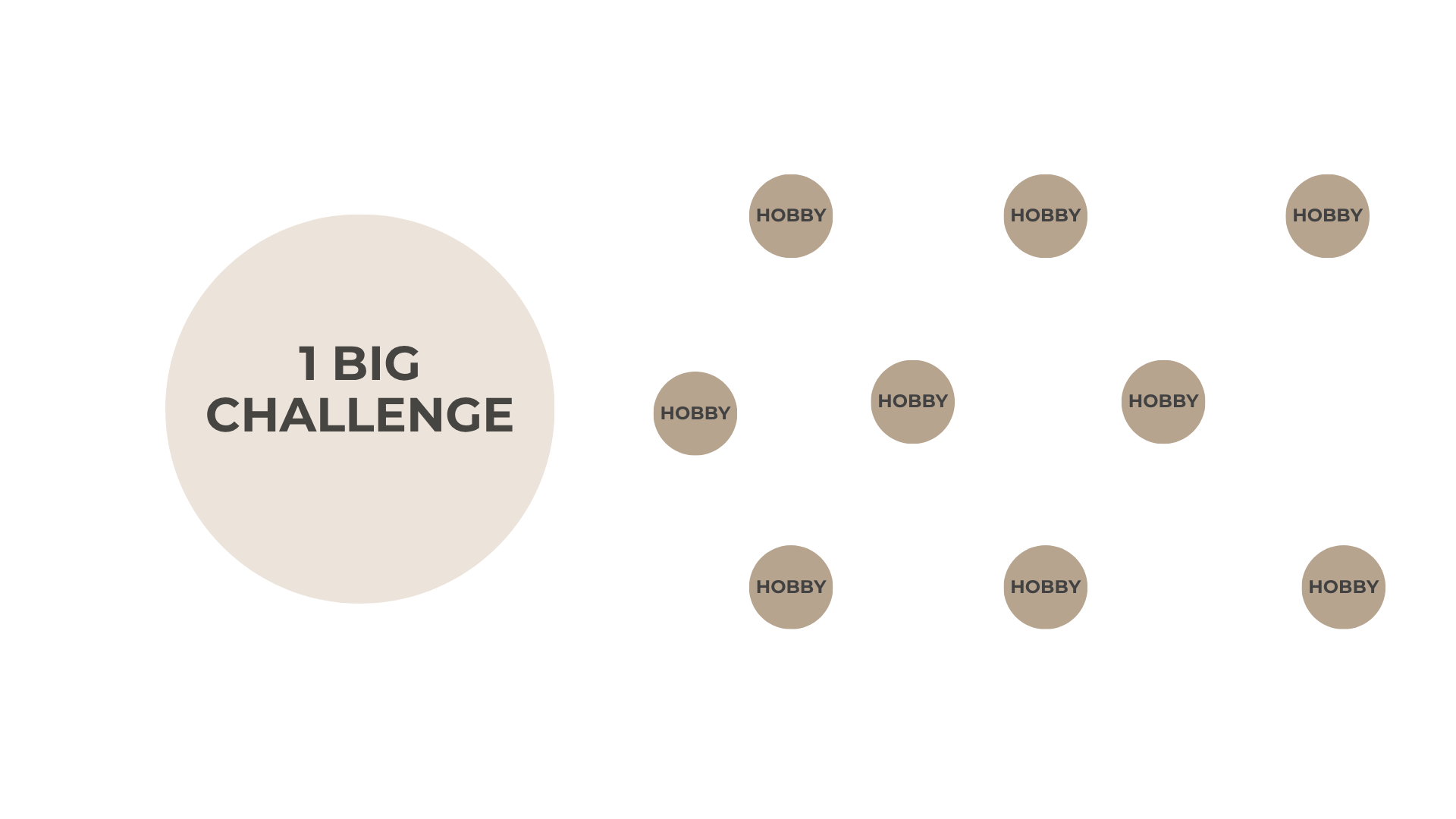
Pair a microhobby with a boring task (a podcast while folding laundry) or use it as a small reward (thirty minutes on a puzzle after the dishes are done). Either way, it makes the boring stuff bearable and gives your brain the stimulation it needs without tipping into too much.
A few self-care for moms with ADHD strategies that help when overstimulation is an ongoing struggle:
- Keep one clutter-free space where you can actually do your microhobbies.
- Get outside, even if it's just reading on a bench while your kids play. The sounds of nature do something a scrolling break never will.
- Add movement somewhere in your day, or pair it with a hobby.
- Notice your triggers, and look for one recurring part of your routine you could change to create margin.
- Try noise-canceling headphones or noise-dampening earplugs during the times of day you're most often triggered.
- Choose screen-free hobbies over scrolling on purpose. Bring a book or a small craft with you so you can use small pockets of time.
Having an actual plan for what to do instead of scrolling makes the biggest difference. Scrolling is the easiest option, and it's also the most overstimulating one. Your brain needs stimulation, just intentional stimulation, and figuring out what scratches that itch without sending you into a spiral is worth the effort.
Letting Go of the Guilt Around Hobbies That Don't Make Money
If every new interest you pick up quietly turns into a possible business idea, you're not alone in that. It's a pattern I fought for years, built on the belief that I didn't deserve to spend time on my own interests unless they were making money for my family.
Once I understood that interest-driven brains run on passion, challenge, and novelty, something clicked. If I wanted to stop relying on [INTERNAL LINK: last-minute panic to get the boring stuff done], I needed to lean into these other strategies instead. Making room for stimulation is what actually got me consistent. It's how my systems started sticking instead of falling apart the moment the novelty wore off.
The other piece was letting go of needing to monetize every interest, and learning to see hobbies as worth doing even if nothing ever comes from them. I don't need to be excellent at everything or finish all the things.
If the puzzle gets boring and I box it up half done, that's okay. If the needlepoint takes three years, that's okay. If I get bored of gel manicures and stop, that's okay too. These things exist to be an outlet, and if they do that for a season before I move on, they did their job.
For years, I felt guilty making time for any of this. I'd make lunch, turn on a show for a quick break, and if my husband Mark walked through between work calls, I'd feel like I needed to justify myself, as if I were doing something wrong just by resting my brain for twenty minutes. It took a lot of reps of sitting with that discomfort, and a lot of long-term proof, before prioritizing stimulation stopped feeling like something I had to earn.
The challenge, the fun, following through on the boring stuff, the self-care, the emotional regulation: it all feeds into each other. Only you can figure out what the right amount of stimulation looks like for your own brain. My husband doesn't know when I'm on the edge of overstimulation or running on empty, and he doesn't know when I'm bored and restless and need a real challenge to chew on. Only you can know that for yourself.
Start With Stimulation, Not a Stricter Routine
If you've been looking for how to stop ADHD burnout without adding one more productivity system to your plate, start here: get honest about your own capacity, pick one area of challenge instead of chasing ten, and give yourself permission to have hobbies that don't make money. Those three shifts move the needle on ADHD burnout in moms in a way that another routine or hack never has for me.
Start small. Notice where your week already has room for a five-minute pocket of stimulation, and protect it the same way you'd protect any other priority.
Want to Go Deeper?
Want more of this kind of honest, practical conversation about ADHD and motherhood? I share a new post like this every week on my Substack, including tools and AI prompts I don't post anywhere else.